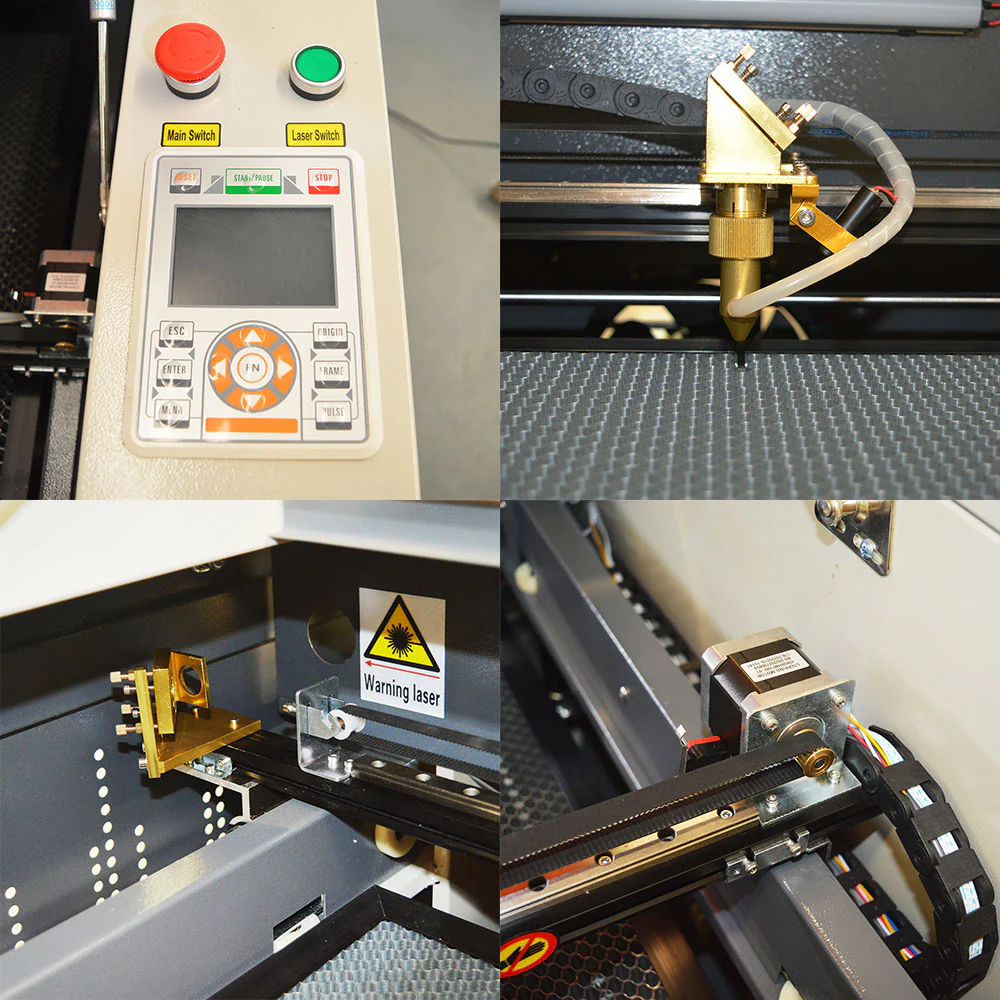
Introduction
CO₂ laser cutting machines are among the most widely used laser systems in modern industry. Known for their high precision, versatility, and cost-effectiveness, they play an essential role in materials processing across multiple sectors such as packaging, textiles, signage, and woodworking.
How CO₂ Laser Cutting Works
CO₂ laser cutting machines utilize a carbon dioxide gas mixture as the active medium, excited by electrical energy to produce a powerful infrared laser beam. The laser is then focused onto the surface of the material, causing it to melt, burn, or vaporize, resulting in clean and precise cuts with minimal mechanical stress.
Key Advantages of CO₂ Laser Cutting Machines
- Wide Material Compatibility
Capable of cutting non-metallic materials such as wood, acrylic, plastics, textiles, leather, glass, and paper.
- High Precision and Smooth Edges
Produces accurate cuts with smooth edges, reducing the need for secondary finishing.
- Flexibility and Efficiency
Ideal for both high-volume production and customized designs, especially in industries requiring detailed patterns.
- Cost-Effective Operation
Lower operational costs compared with other cutting technologies, especially for non-metal applications.
- Minimal Waste
The non-contact cutting process reduces material waste and prevents deformation.
Applications of CO₂ Laser Cutting Machines
- Advertising & Signage: Cutting acrylic letters, displays, and decorative designs.
- Packaging Industry: Processing paperboard, cardboard, and specialty packaging materials.
- Textiles & Fashion: Cutting fabrics, leather, and synthetic materials with high precision.
- Woodworking: Creating furniture components, models, and intricate engravings.
- Glass & Ceramics: Engraving and surface processing of fragile materials.
Market Trends and Future Development
The demand for CO₂ laser cutting machines continues to grow, driven by global manufacturing and customization needs. Future development will focus on:
- Automation: Integration with CNC systems and robotics for higher productivity.
- Green Technology: More energy-efficient designs and environmentally friendly exhaust treatment systems.
- Digitalization: Connectivity with IoT platforms for smart monitoring and predictive maintenance.
- Hybrid Solutions: Combination with fiber lasers to cover both metallic and non-metallic material processing.
Conclusion
As a reliable and versatile tool, the CO₂ laser cutting machine remains a cornerstone of non-metal material processing. Its precision, flexibility, and affordability make it an essential choice for industries worldwide. With continuous advancements in automation and sustainability, CO₂ laser cutting technology will continue to expand its role in modern manufacturing.